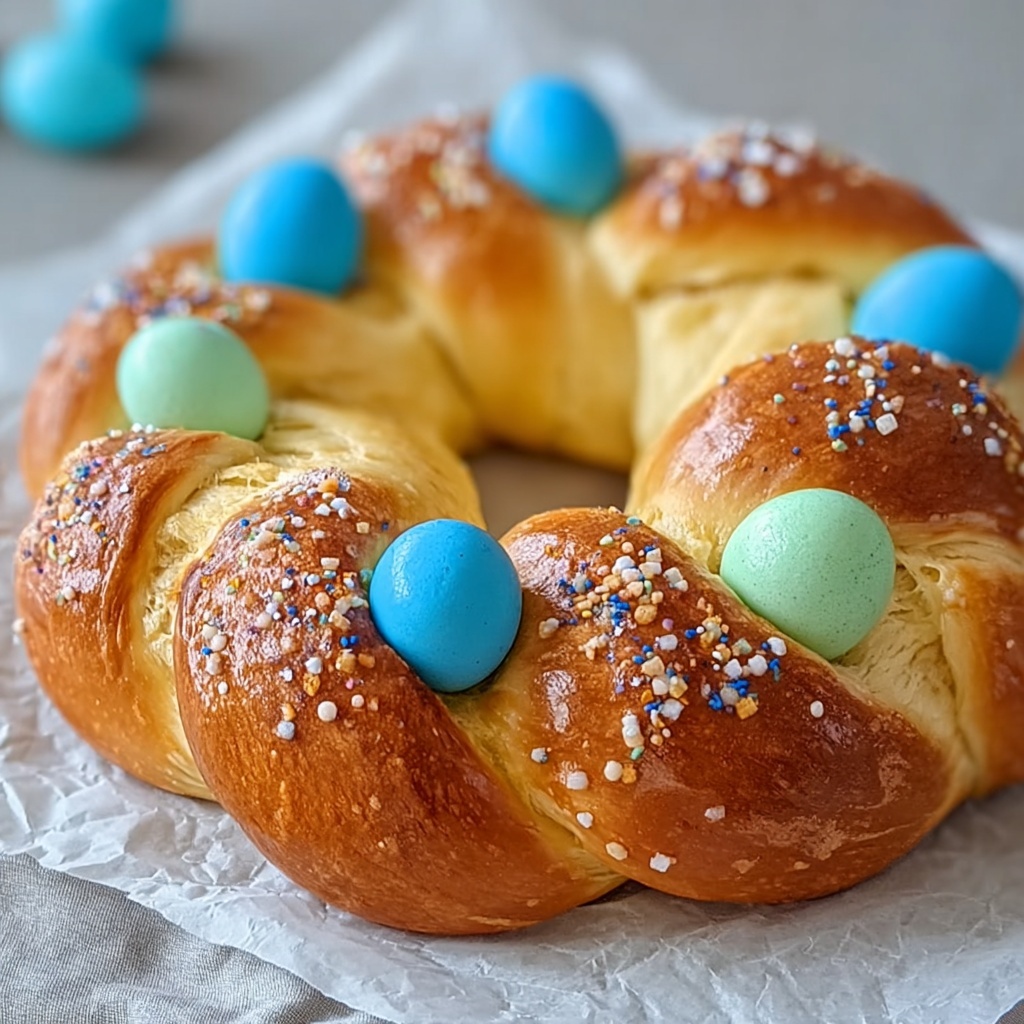
If you are searching for a beautiful and delicious traditional treat that brings a burst of color and a touch of festivity to your Easter table, look no further than this Italian Easter Bread With Dyed Eggs Recipe. It’s a sweet, braided bread enriched with subtle hints of vanilla and orange zest, decorated with vibrantly dyed hard-boiled eggs nestled right into the dough. Every bite is soft, sweet, and filled with the warm spirit of celebration. This recipe has a special place in many hearts and kitchens, and I am so excited to share it with you because it combines simple kitchen staples into a loaf that looks as joyful as it tastes.
Ingredients You’ll Need
Getting ready to make this Italian Easter bread could not be easier, thanks to the straightforward but thoughtfully chosen ingredients. Each one plays a vital role, whether it’s building the perfect dough texture, adding sweetness, or giving that lovely golden crust. Let’s take a look at what you’ll need to bring it all together.
- 4 cups all-purpose flour: The foundation of the bread, providing structure and chewiness.
- 1/2 cup granulated sugar: Adds sweetness that balances the richness of the dough perfectly.
- 1 packet (2 1/4 teaspoons) active dry yeast: The magic ingredient that makes the bread rise light and fluffy.
- 1 teaspoon salt: Enhances all the flavors and balances the sweetness.
- 1/2 cup milk, warmed to 110°F: Helps activate the yeast and enriches the dough.
- 1/2 cup water, warmed to 110°F: Works with the milk to create the perfect yeast environment.
- 1/4 cup unsalted butter, softened: Adds softness and a buttery richness to the bread.
- 2 large eggs: Incorporate moisture and a tender crumb.
- 1 teaspoon vanilla extract: Offers a gentle, aromatic sweetness.
- 1 teaspoon orange zest (optional): Infuses a fresh citrus note that brightens each bite.
- 1/4 cup sugar (for sprinkling): For a delightful, sweet crust topping.
- 4-6 hard-boiled eggs (dyed in pastel colors for Easter): The iconic decorative and edible centerpiece.
- 1 egg yolk (for egg wash): Gives the bread a shiny, golden finish.
How to Make Italian Easter Bread With Dyed Eggs Recipe
Step 1: Prepare the Dough
Start by waking up the yeast. Mix the warm milk, water, and a tablespoon of sugar in a large bowl—this cozy bath encourages the yeast to become nice and frothy in about 5 to 10 minutes. It’s the first step toward that perfect rise we all love in a good bread.
Step 2: Mix the Ingredients
Next, combine your dry ingredients: flour, the remaining sugar, and salt. Then, pour in the yeast mixture, softened butter, eggs, and vanilla extract. Mix everything together until the dough just begins to come together. This is where your bread starts taking shape, so it’s always exciting!
Step 3: Knead the Dough
Turn the dough out onto a floured surface and get hands-on. Knead it for about 5 to 8 minutes until it becomes smooth and elastic. Don’t worry if it feels a bit sticky; just add flour little by little to get the right consistency. Place it into a greased bowl, cover it, and let it rise in a warm spot for about 1 to 1.5 hours or until it doubles in size.
Step 4: Shape the Bread
After the dough has risen, punch it down gently to remove any air bubbles. Divide it into three equal pieces and roll each into a long rope roughly 12 to 15 inches. Braid them together, then form a circle, pinching the ends to seal the loaf. This braided crown is the signature look of Italian Easter bread.
Step 5: Add the Dyed Eggs
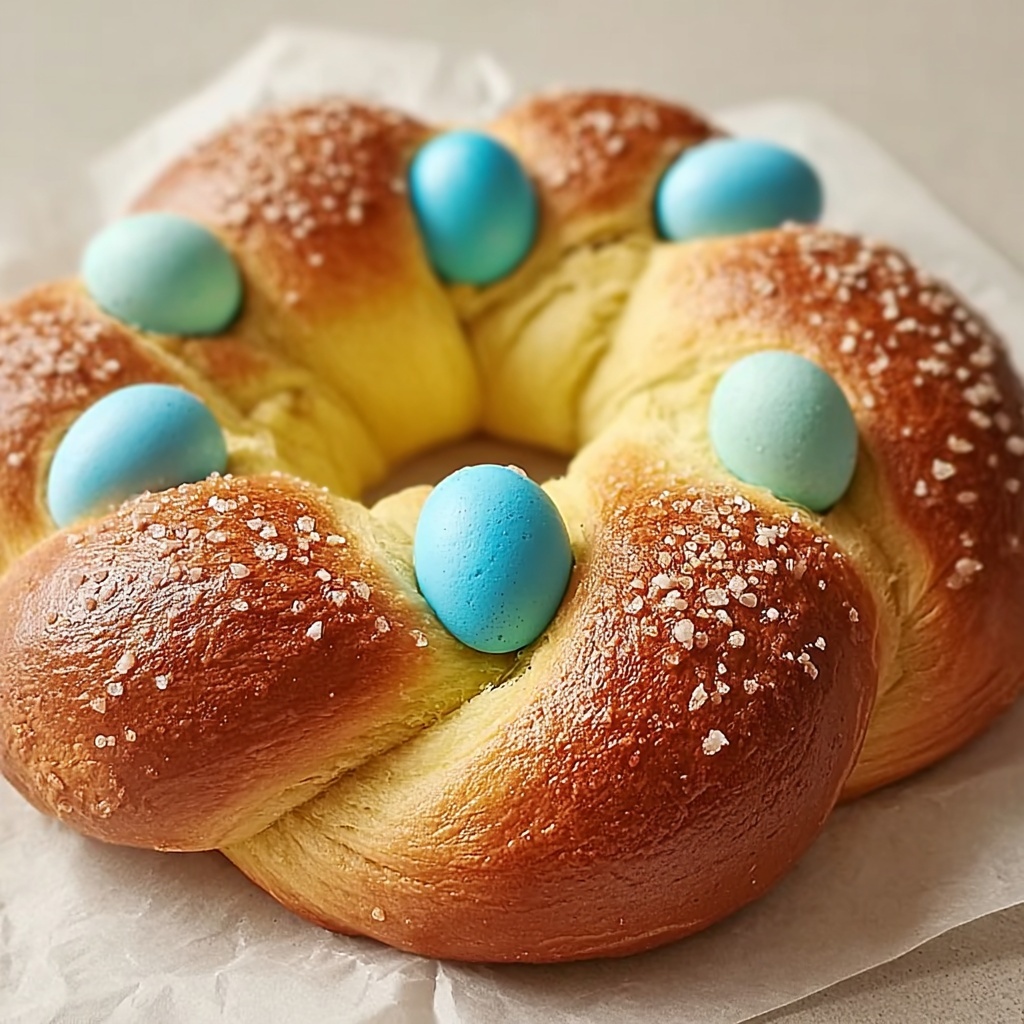
Now for the showstopper: press your gently dyed hard-boiled eggs right into the braided dough. Arrange them evenly or get creative with your placement, just making sure they’re secure and won’t roll out during baking. The colorful eggs shining through the dough are what make this bread truly festive.
Step 6: Let the Dough Rise Again
Cover your beautiful loaf with a clean towel, and let it rest and puff up for another 30 to 45 minutes. This second rise helps ensure your bread will be light and airy on the inside once baked.
Step 7: Prepare the Egg Wash
Whisk together the egg yolk with a tablespoon of water and gently brush over every inch of the loaf. This step is what will give the crust that irresistible golden color and a lovely sheen.
Step 8: Bake the Bread
Preheat your oven to 350°F (175°C). Place the bread onto a parchment-lined baking sheet and bake for 25 to 30 minutes. You’ll know it’s done when the bread is gorgeously golden brown and gives a hollow sound when tapped on the bottom—pure bread joy!
Step 9: Cool and Serve
Once your bread is baked, let it cool on a wire rack. This helps the texture set so when you slice into it, the bread stays soft and tender. Serve warm or at room temperature and marvel at how those pastel eggs peek through each slice. The dyed eggs are perfectly edible and make a festive touch either way.
How to Serve Italian Easter Bread With Dyed Eggs Recipe
Garnishes
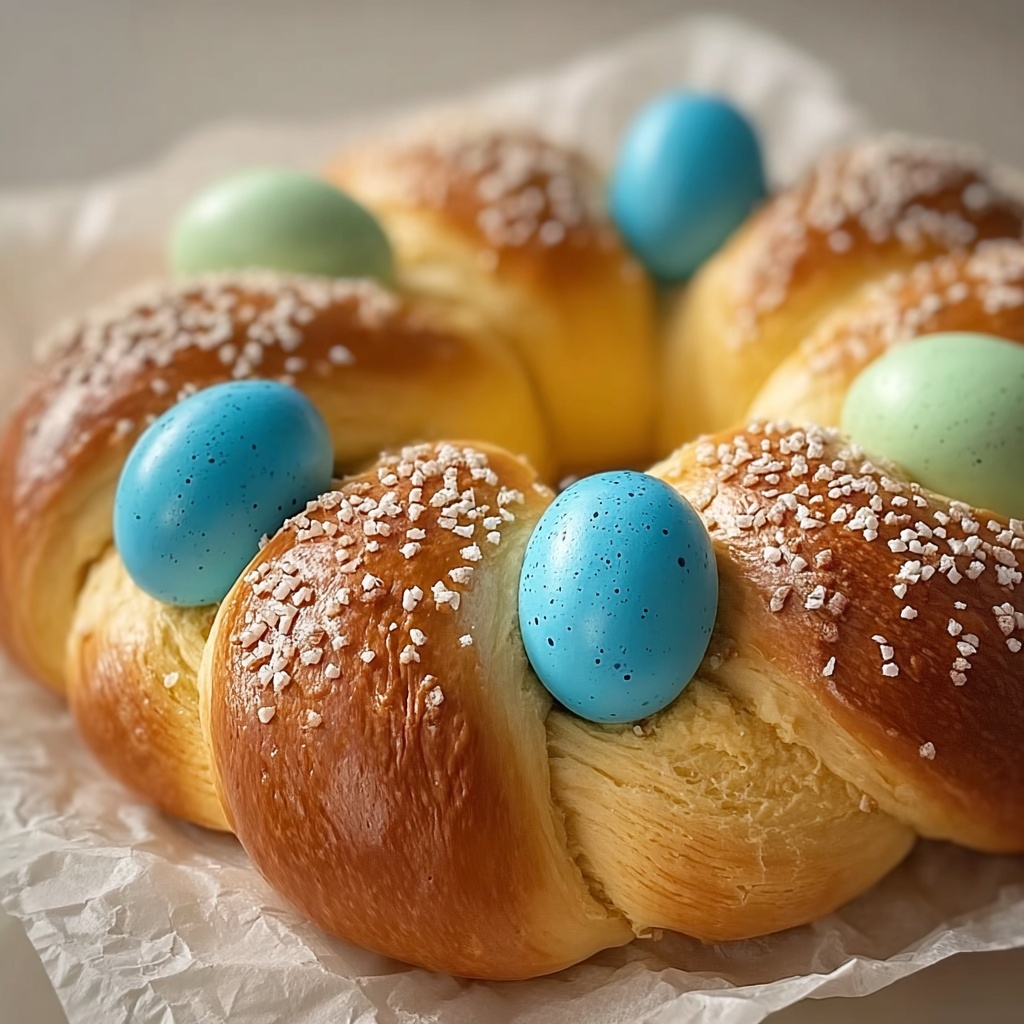
A light dusting of powdered sugar over the top adds a delicate sweetness and a pretty, snowy finish. For a pop of freshness, try a few sprigs of green herbs like rosemary or thyme around the serving platter—it contrasts beautifully with the warm tones of the bread.
Side Dishes
This Italian Easter Bread With Dyed Eggs Recipe pairs wonderfully with savory sides like prosciutto, fresh ricotta, or even a simple cheese platter. A bowl of fresh fruit or a lightly dressed salad also balances the richness of the bread, making your Easter meal feel complete and celebratory.
Creative Ways to Present
Consider wrapping the braided loaf with a colorful ribbon before serving for an extra-special touch. If you want to impress family and friends, serve the bread as part of a brunch buffet with small bowls of dipping honey or melted butter. It’s a joyful centerpiece that encourages sharing and smiles.
Make Ahead and Storage
Storing Leftovers
Wrap leftover Italian Easter Bread With Dyed Eggs tightly in plastic wrap or store it in an airtight container. Keep it at room temperature for up to three days to preserve softness and flavor. Avoid refrigeration, as it can dry out the bread.
Freezing
If you want to save some for later, this bread freezes beautifully. Wrap it well in plastic wrap, then again in foil or a freezer bag to prevent freezer burn. Frozen bread keeps well for up to three months. When you’re ready to enjoy, thaw it overnight at room temperature.
Reheating
To bring back that fresh-baked warmth, reheat slices in a toaster oven or oven set to 300°F for about 10 minutes. This method revives the bread’s crust while keeping the inside soft and inviting. Avoid microwaving, which can make the bread chewy or rubbery.
FAQs
Can I use a different type of flour for this Italian Easter Bread With Dyed Eggs Recipe?
All-purpose flour works best for the balance of texture and structure in this bread, but you can experiment with bread flour for a chewier crumb. Just keep in mind it might affect how the dough rises and its final softness.
Do I have to dye the eggs myself?
While dying your own eggs is a fun, traditional activity that adds a personal touch, you can also purchase pre-dyed eggs from many grocery stores during the Easter season to save time.
What if I don’t eat eggs—can I skip decorating with dyed eggs?
Absolutely! You can still enjoy the bread by baking it without the eggs or decorate the braid with colorful candied fruits, nuts, or edible flowers for a lovely alternative presentation.
How long does the dough take to rise?
The first rise generally takes about 1 to 1.5 hours until the dough doubles in size. The second rise after shaping is shorter, around 30 to 45 minutes, just enough to give the loaf a soft and airy texture.
Can I make this bread vegan?
You can try substituting the milk with plant-based milk, use vegan butter, and replace the eggs with flax eggs or other egg replacers. Keep in mind that the texture and flavor will vary from the classic version, but it can still yield a tasty result.
Final Thoughts
This Italian Easter Bread With Dyed Eggs Recipe is more than just a delicious baked good; it’s a celebration in edible form, full of warmth, tradition, and happy memories. Whether you are baking it for an Easter gathering or simply to bring some spring joy into your home, I highly encourage you to try making this bread. Its soft sweetness braided with colorful eggs will surely add a special touch to your holiday table and leave everyone asking for seconds!
Print
Italian Easter Bread With Dyed Eggs Recipe
- Prep Time: 30 minutes
- Cook Time: 30 minutes
- Total Time: 2 hours 15 minutes
- Yield: 1 large loaf (serves 8-10)
- Category: Bread
- Method: Baking
- Cuisine: Italian
Description
This traditional Italian Easter Bread is a beautifully braided, slightly sweet bread adorned with colorful dyed eggs nestled into the dough. Soft, fluffy, and flavorful with hints of vanilla and orange zest, this festive bread is perfect for celebrating Easter and sharing with family and friends.
Ingredients
Dough Ingredients
- 4 cups all-purpose flour, plus extra for kneading
- 1/2 cup granulated sugar
- 1 packet (2 1/4 teaspoons) active dry yeast
- 1 teaspoon salt
- 1/2 cup milk, warmed to 110°F
- 1/2 cup water, warmed to 110°F
- 1/4 cup unsalted butter, softened
- 2 large eggs
- 1 teaspoon vanilla extract
- 1 teaspoon orange zest (optional, for flavor)
Topping and Decoration
- 1/4 cup sugar (for sprinkling)
- 4–6 hard-boiled eggs, dyed in pastel colors for Easter
- 1 egg yolk (for egg wash)
Instructions
- Prepare the Dough: In a large bowl, combine the warm milk, warm water, and 1 tablespoon of sugar. Sprinkle the yeast over the mixture and let it sit for about 5-10 minutes until it becomes frothy, indicating the yeast is active.
- Mix the Ingredients: In a separate large bowl, whisk together the flour, remaining sugar, and salt. Add the yeast mixture, softened butter, eggs, vanilla extract, and optional orange zest. Mix everything until the dough begins to form.
- Knead the Dough: Turn the dough onto a floured surface and knead for 5-8 minutes until smooth and elastic. If sticky, add flour gradually. Place dough in a greased bowl, cover with a towel, and let it rise in a warm place for 1 to 1.5 hours until doubled in size.
- Shape the Bread: Punch down the dough and divide it into 3 equal pieces. Roll each into 12-15 inch ropes. Braid the ropes together and form into a round loaf, pinching the ends to secure.
- Add the Dyed Eggs: Gently press the dyed hard-boiled eggs into the braided dough in a symmetrical or preferred pattern, ensuring they are firmly nestled.
- Let the Dough Rise Again: Cover the loaf with a towel and let it rise for 30-45 minutes until puffed.
- Prepare the Egg Wash: Whisk the egg yolk with 1 tablespoon water in a small bowl. Brush this over the entire loaf for a golden finish.
- Bake the Bread: Preheat oven to 350°F (175°C). Place bread on a parchment-lined baking sheet and bake for 25-30 minutes until golden brown and hollow-sounding when tapped on the bottom.
- Cool and Serve: Cool on a wire rack before slicing. Eat the bread along with the eggs or keep the eggs for decoration.
Notes
- You can add 1 teaspoon of orange zest for a fragrant citrus flavor but it is optional.
- Make sure the milk and water are warmed to about 110°F to activate the yeast properly.
- If dough is sticky during kneading, add flour gradually to avoid a dense bread.
- Use pastel-colored eggs dyed ahead of time to add festive color to the bread.
- Brush the entire loaf evenly with egg wash for a shiny golden crust.
- Ensure bread is cooled completely before slicing to maintain texture.
- Store leftover bread wrapped in plastic at room temperature for up to 3 days.