Description
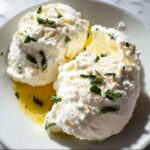
This Homemade Italian Ricotta Recipe guides you through the traditional process of making fresh, creamy ricotta cheese using raw unpasteurized milk, whey starter or vinegar, and calf rennet. Perfect for cheese lovers looking to craft authentic ricotta at home, this recipe requires patience and gentle handling to achieve the delicate curds that define quality ricotta.
Ingredients
Scale
Milk and Starter
- 20 liters raw unpasteurized cow or sheep’s milk
- Whey starter (or white vinegar, as an alternative)
Coagulating Agents
- Organic calf rennet (powdered)
- Demineralized water (for dissolving rennet)
Instructions
- Filter the Milk: Use a fine strainer to remove any impurities from the raw unpasteurized milk before beginning the cheesemaking process.
- Add Starter and Heat Milk: Add the whey starter or vinegar to the milk and gently mix. Then heat the milk to 40°C (104°F) in a large boiler pot over the stove, ensuring even temperature for optimal fermentation.
- Add Rennet: Remove the pot from heat and dissolve powdered calf rennet in demineralized water. Pour the rennet slowly in a circular motion over the milk while gently stirring in one direction, then stop the motion by stirring the opposite way.
- Coagulate the Milk: Allow the milk to coagulate undisturbed until the curds form. Test readiness by lightly touching the mixture—your finger should come back clean.
- Cut the Curd: Make the first cut to separate whey from the curd, then continue cutting in smooth strokes across the pot. Let it rest to facilitate further separation.
- Strain the Mixture: Pour the curds and whey into another boiler pot lined with a strainer and cheesecloth to separate the curds.
- Heat the Whey and Milk: Return the filtered liquid to the stove and heat gently to 77-80°C (176°F), essential for ricotta formation. Stir gently initially but allow it to come to the surface without mixing as it heats.
- Boil the Mixture: Continue to boil gently to tighten and harden the ricotta curds, signaling they are ready.
- Collect the Ricotta: Use a slotted spoon to scoop the ricotta into draining containers and allow excess liquid to drain into a tray below.
- Enjoy or Store: Serve your ricotta fresh, or incorporate it into your favorite recipes. The cheese can be enjoyed hot or cold, or stored for later use.
Notes
- Using raw unpasteurized milk is traditional and essential for authentic flavor, but ensure it is from a trusted source to maintain safety.
- Whey starter promotes better flavor development; if unavailable, white vinegar can serve as a substitute.
- Maintain the correct temperatures precisely for successful coagulation and ricotta formation.
- The curds formed in step 7 can be reserved for making mozzarella if desired.
- Gentle stirring and careful handling help produce delicate curds that are key to creamy ricotta texture.