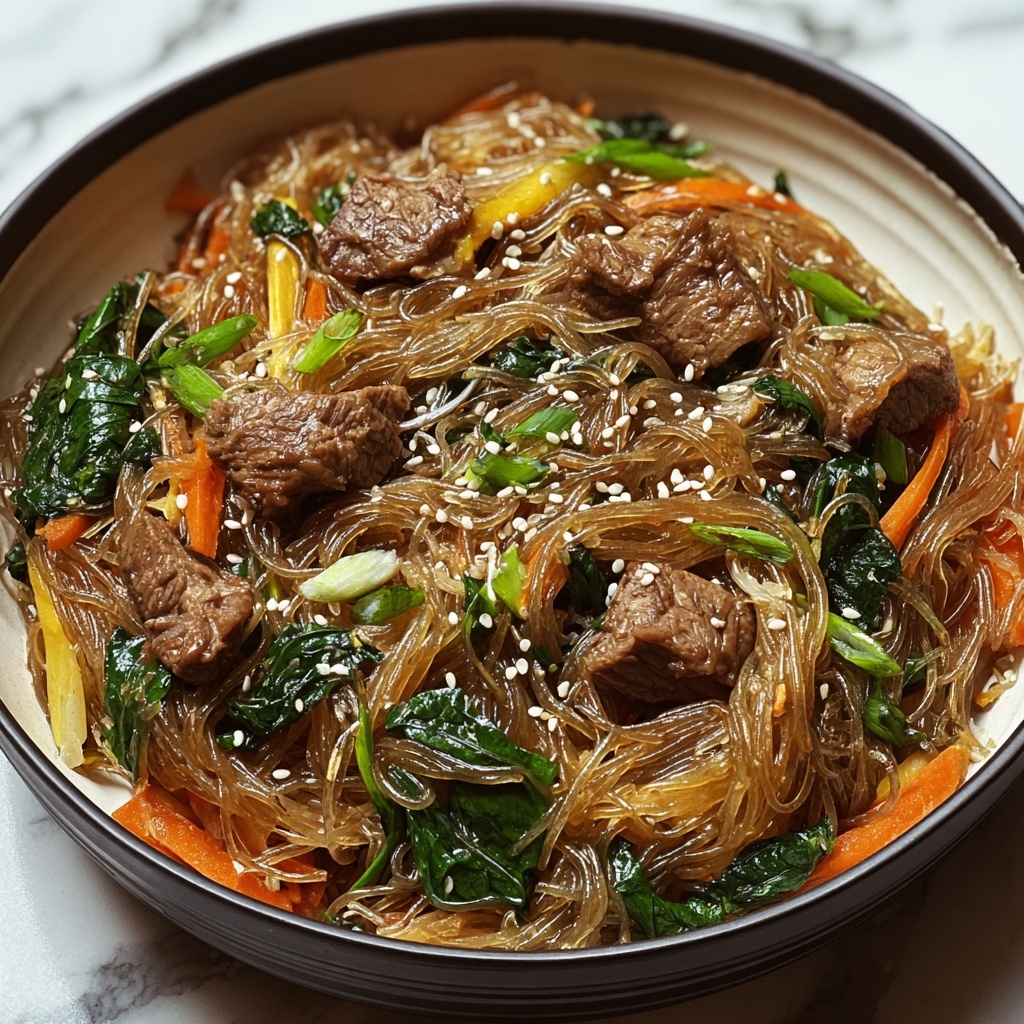
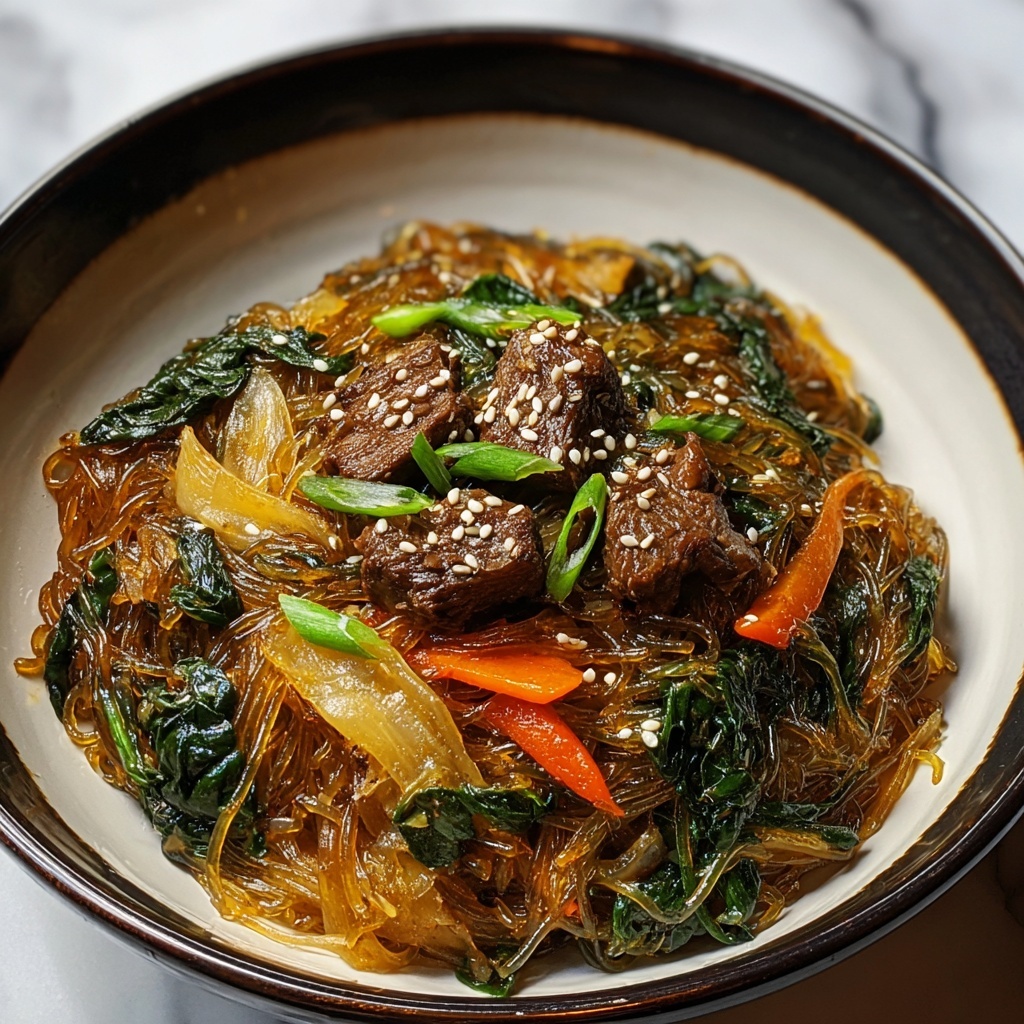
If you’ve been craving something vibrant, comforting, and full of delicious layers of flavor, let me introduce you to the magic of this Delicious Japchae: Korean Stir-Fried Glass Noodles with Beef and Vegetables Recipe. It’s a dazzling combination of silky sweet potato glass noodles, tender marinated beef, crisp-tender veggies, and a sweet-savory sauce that brings it all together in every delightful bite. This dish is not only a feast for your taste buds but also a colorful celebration of textures and aromas that make Korean cooking so beloved worldwide.
Ingredients You’ll Need
The beauty of this Delicious Japchae: Korean Stir-Fried Glass Noodles with Beef and Vegetables Recipe lies in its simple yet essential ingredients. Each component is carefully chosen to build a harmony of taste, texture, and color that invites you to savor every forkful.
- 2 lb thin-sliced beef: Choose tender cuts for quick cooking and rich flavor, or swap with chicken, tofu, or shrimp for your preference.
- 1 lb Korean sweet potato noodles (glass noodles): These chewy, translucent noodles soak up the sauce beautifully and offer a unique texture.
- 3 medium carrots, julienned: Add a lovely crunch and bright orange hue to the dish.
- 1 large white onion, thinly sliced: Provides sweetness and depth as it gently softens in the pan.
- ½ bunch green onions, chopped: Fresh and slightly pungent, perfect for garnish and flavor.
- 6 garlic cloves, minced: The fragrant backbone that enhances every other ingredient.
- ½ lb spinach leaves: Adds vibrant green color and a tender bite that balances the dish.
- 4 tbsp sesame oil (divided): Nutty, toasty aroma and flavor that’s signature in Korean cooking.
- 1 tbsp olive oil: For cooking the noodles and sautéing veggies gently.
- 6 tbsp soy sauce (or tamari for gluten-free): The savory umami elixir that ties all the flavors together.
- 3 tbsp brown sugar: Adds a subtle sweetness to balance the saltiness and deepen flavor.
How to Make Delicious Japchae: Korean Stir-Fried Glass Noodles with Beef and Vegetables Recipe
Step 1: Cook the Noodles
Start by bringing a large pot of water to a rolling boil with a drizzle of olive oil to prevent sticking. Add the sweet potato noodles and let them cook for 5 to 6 minutes until tender but still chewy. Once done, drain the noodles well and set them aside. This step lays the foundation for that signature chewiness that makes this dish so satisfying.
Step 2: Cook the Beef
While the noodles cook, heat a skillet over high heat to quickly sear the beef. Add the thinly sliced beef and let it brown evenly without overcrowding. As it cooks, season with half the soy sauce, sesame oil, and brown sugar. This creates a beautifully caramelized and flavorful beef that complements the noodles perfectly. Once browned, remove the beef from the skillet and set it aside.
Step 3: Sauté the Vegetables
In a fresh skillet, heat the olive oil and toss in the julienned carrots and thinly sliced onion. Cook until they soften but still hold a bit of crispness, unlocking their natural sweetness. Add the remaining soy sauce, sesame oil, and brown sugar, and stir well to coat. Then mix in the garlic and green onions and cook for just another minute, letting those bright, fresh aromatics shine through.
Step 4: Add the Spinach
Throw in the spinach leaves and stir gently until they wilt, adding a fresh green pop and a tender mouthfeel. The spinach melds seamlessly with the other vegetables and keeps the dish light and vibrant.
Step 5: Combine Ingredients
Now for the best part—combine the cooked beef and sautéed vegetables with the drained noodles in a large bowl. Toss everything together thoroughly so that the sweet-savory sauce coats every strand of noodle and piece of meat, ensuring each bite bursts with flavor and texture.
Step 6: Serve
Finally, serve your japchae warm, garnished with extra chopped green onions for that final fresh punch. This dish is at its happiest when enjoyed immediately, its flavors and textures alive and inviting.
How to Serve Delicious Japchae: Korean Stir-Fried Glass Noodles with Beef and Vegetables Recipe
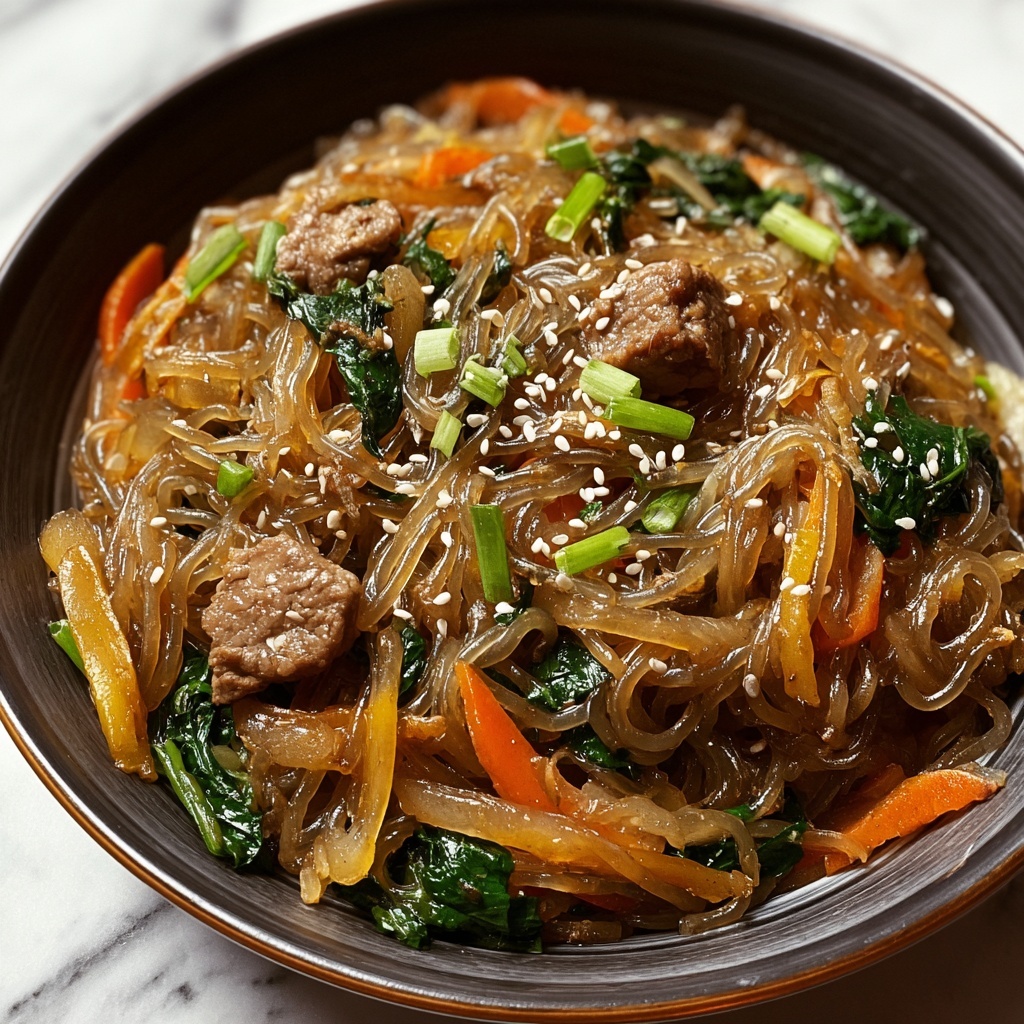
Garnishes
Extra green onions, toasted sesame seeds, or even a sprinkle of crushed roasted seaweed add wonderful texture and visual appeal. These simple garnishes elevate the dish’s presentation and highlight its Korean roots.
Side Dishes
Japchae pairs beautifully with kimchi, pickled radish, or a simple bowl of steamed rice to round out the meal without overwhelming the delicate flavors. For a feast, include other Korean favorites like bulgogi or a refreshing cucumber salad.
Creative Ways to Present
For dinner parties, serve japchae in shallow bowls or on a large platter with colorful garnishes arranged on top. You can even stuff the noodles into crisp lettuce leaves for a fun, hands-on experience that’s both interactive and delicious.
Make Ahead and Storage
Storing Leftovers
Keep leftover japchae in an airtight container in the refrigerator for up to 3 days. The noodles may absorb the sauce and get softer, but reheating gently will bring them back to life.
Freezing
I recommend skipping freezing japchae since sweet potato noodles can become overly soft and lose their chewy texture once thawed. Fresh is always best for this dish.
Reheating
Reheat japchae gently in a skillet over medium heat, adding a splash of water or additional sesame oil if needed to loosen the noodles. Avoid using the microwave as it can make the noodles gummy.
FAQs
Can I use other proteins instead of beef?
Absolutely! Chicken, shrimp, or even tofu make great substitutes. Just adjust cooking times accordingly and season similarly for that authentic flavor blend.
Are Korean sweet potato noodles gluten-free?
Yes, they are naturally gluten-free, making this recipe a fantastic option for those avoiding gluten.
How spicy is japchae?
Japchae is traditionally not spicy; it focuses on a sweet-savory flavor profile. However, you can always add some chili flakes or sliced fresh chili if you enjoy a little heat.
Can I prepare parts of this dish ahead of time?
You can julienne vegetables and marinate beef a day in advance, which helps speed up your cooking session. Keep noodles and cooked components separate until just before serving.
What’s the best way to julienne carrots?
Use a sharp knife to cut carrots into thin, matchstick-sized strips or use a mandoline slicer for uniform pieces that cook evenly and look beautiful.
Final Thoughts
I can’t recommend this Delicious Japchae: Korean Stir-Fried Glass Noodles with Beef and Vegetables Recipe enough—it is a treasure trove of flavors, textures, and colors that bring Korean home cooking straight to your table. Whether it’s a weeknight dinner or a special occasion, this dish will captivate anyone who loves a perfect blend of savory sweetness and fresh veggies. Give it a try, and I promise it will become one of your new favorites to share and savor!
Print
Delicious Japchae: Korean Stir-Fried Glass Noodles with Beef and Vegetables Recipe
- Prep Time: 15 minutes
- Cook Time: 20 minutes
- Total Time: 35 minutes
- Yield: 4 servings
- Category: Main Course
- Method: Stovetop
- Cuisine: Korean
- Diet: Gluten Free
Description
Japchae is a classic Korean stir-fried noodle dish featuring tender sweet potato glass noodles tossed with savory beef, fresh vegetables, and a flavorful blend of soy sauce, sesame oil, and brown sugar. This vibrant dish is both comforting and nutritious, perfect as a main course or a delightful side.
Ingredients
Protein
- 2 lb thin-sliced beef (or substitute with chicken, tofu, or shrimp)
Noodles
- 1 lb Korean sweet potato noodles (glass noodles)
Vegetables
- 3 medium carrots, julienned
- 1 large white onion, thinly sliced
- ½ bunch green onions, chopped
- 6 garlic cloves, minced
- ½ lb spinach leaves
Oils & Sauces
- 4 tbsp sesame oil (divided)
- 1 tbsp olive oil
- 6 tbsp soy sauce (or tamari for gluten-free)
- 3 tbsp brown sugar
Instructions
- Cook the Noodles: Bring water to a boil in a large pot with a drizzle of olive oil to prevent sticking. Add the sweet potato noodles and cook for 5-6 minutes until tender. Drain well and set aside to cool slightly.
- Cook the Beef: Heat a skillet over high heat and add the thinly sliced beef. Cook until browned and almost cooked through, stirring frequently. Season with half of the soy sauce, 2 tablespoons of sesame oil, and half of the brown sugar, stirring to coat the beef evenly. Once cooked, remove from heat and set aside.
- Sauté the Vegetables: In a separate skillet, heat the olive oil over medium heat. Add the julienned carrots and thinly sliced onions, sautéing until softened but still slightly crisp, about 4-5 minutes. Add the remaining soy sauce, 2 tablespoons sesame oil, and the rest of the brown sugar. Stir in minced garlic and chopped green onions, cooking for an additional minute to release their aroma.
- Add the Spinach: Add the spinach leaves to the skillet with the vegetables and cook, stirring constantly, until the spinach wilts down completely, about 2 minutes.
- Combine Ingredients: In a large mixing bowl, combine the cooked noodles, sautéed vegetables with spinach, and the cooked beef. Drizzle the remaining 1 tablespoon of sesame oil over the mixture. Toss all ingredients thoroughly to ensure even distribution of flavors and oils.
- Serve: Serve the Japchae warm. Optionally, garnish with extra chopped green onions or sesame seeds for added texture and flavor. Japchae is best enjoyed immediately but can be served at room temperature as well.
Notes
- Sweet potato noodles are also known as glass noodles or dangmyeon and are a key ingredient for authentic Japchae.
- Substitute beef with chicken, tofu, or shrimp for variety or dietary needs.
- For a gluten-free version, use tamari instead of soy sauce.
- Do not overcook the noodles or vegetables to avoid sogginess; they should remain slightly chewy and crisp.
- Feel free to garnish with toasted sesame seeds or additional green onions for added flavor and presentation.